Structuring a continental approach to circular economy transition in Africa
Coordinated frameworks that align countries, regions, and institutions around shared priorities are necessary for advancing circular economy transitions at a continental scale.
The Continental Circular Economy Action Plan for Africa (2024–2034) provides a strategic framework to guide circular economy development across the continent. Africa Circular and Trinomics B.V., developed this Action Plan with funding from the European Union Delegation to the African Union, the plan reflects a collective effort to move beyond fragmented approaches and toward coordinated action.
The development of the Action Plan builds on key continental mandates. Decisions from the Third Specialised Technical Committee (STC) on Agriculture, Rural Development, Water and Environment (2019) and the Seventeenth Session of the African Ministerial Conference on the Environment (AMCEN-17) called for a broader shift toward circular economy approaches beyond waste management. These mandates created the foundation for a process aimed at defining a shared continental direction.
A multi-stakeholder process across Africa
The development of the Action Plan was shaped through a structured and inclusive process involving institutions, experts, and partners across Africa.
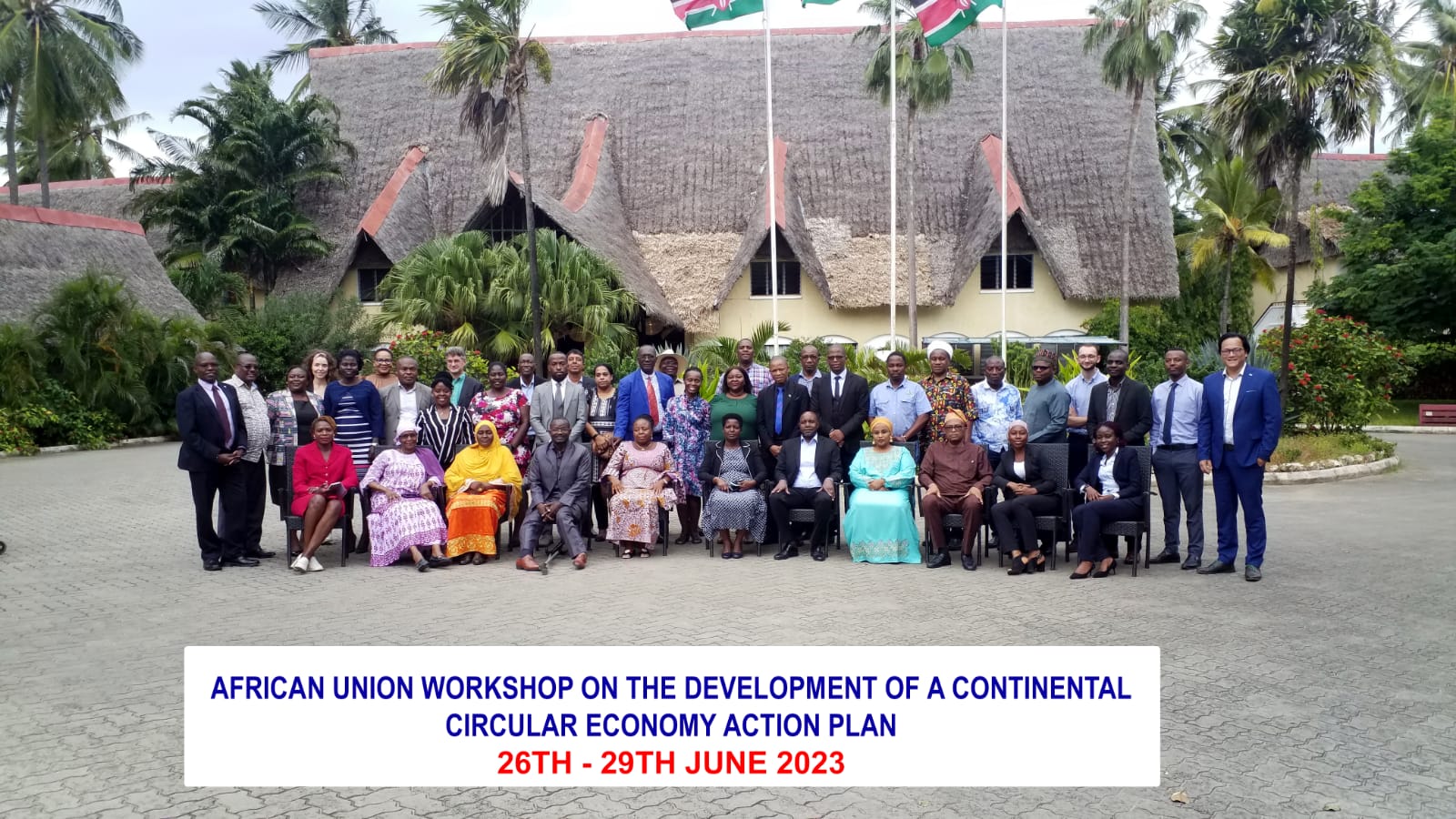
In 2020 an expert working group on circular economy served as the core technical and advisory body. Through a series of consultations and technical exchanges, the group contributed to shaping the roadmap and refining its priorities.
This process was complemented by extensive stakeholder engagement. More than 30 African Union Member States, Regional Economic Communities (RECs), and development partners contributed to that the Action Plan. The collaboration reflects the diverse perspectives and regional realities.
Combining local knowledge and continental analysis
A key feature of the Action Plan is its approach to information gathering, combining bottom-up insights with continental-level analysis.
This included:
- engagement with national experts to capture local practices and sector dynamics,
- desk research to identify existing initiatives and address data gaps, and
- use of international datasets to support comparability across countries.
By aggregating this information at regional and continental levels, the Action Plan was able to define priorities that reflect both local realities and broader systemic trends.
Priority sectors for circular transformation
The Action Plan identifies key sectors where circular approaches can generate impact across Africa.
These include:
- Horizontal sectors: water, waste, and energy
- Vertical sectors: agri-food and fisheries, transport and mobility, tourism, and industry (including construction, plastics, electronics, textiles, and mining)
This structure reflects the need to address both cross-cutting systems and sector-specific opportunities.
Towards implementation and continental coordination
The Action Plan officially launched at the 20th Ordinary Session of the African Ministerial Conference on the Environment (AMCEN).
Its development was supported by a range of technical and financial partners, including the United Nations Economic Commission for Africa (ECA), the United Nations Environment Programme (UNEP), the European Union Delegation to the African Union, and the Resilience Initiative Africa (RIA), with support from the German Federal Ministry for Economic Cooperation and Development (BMZ) and implementation by GIZ.
Read the full report; version anglaise et French version here!
| Circular economy transitions at scale depend on coordinated frameworks that connect national priorities with regional and continental action. The Action Plan provides a foundation for more coherent and sustained implementation across Africa. |


 Français
  English (South Africa)